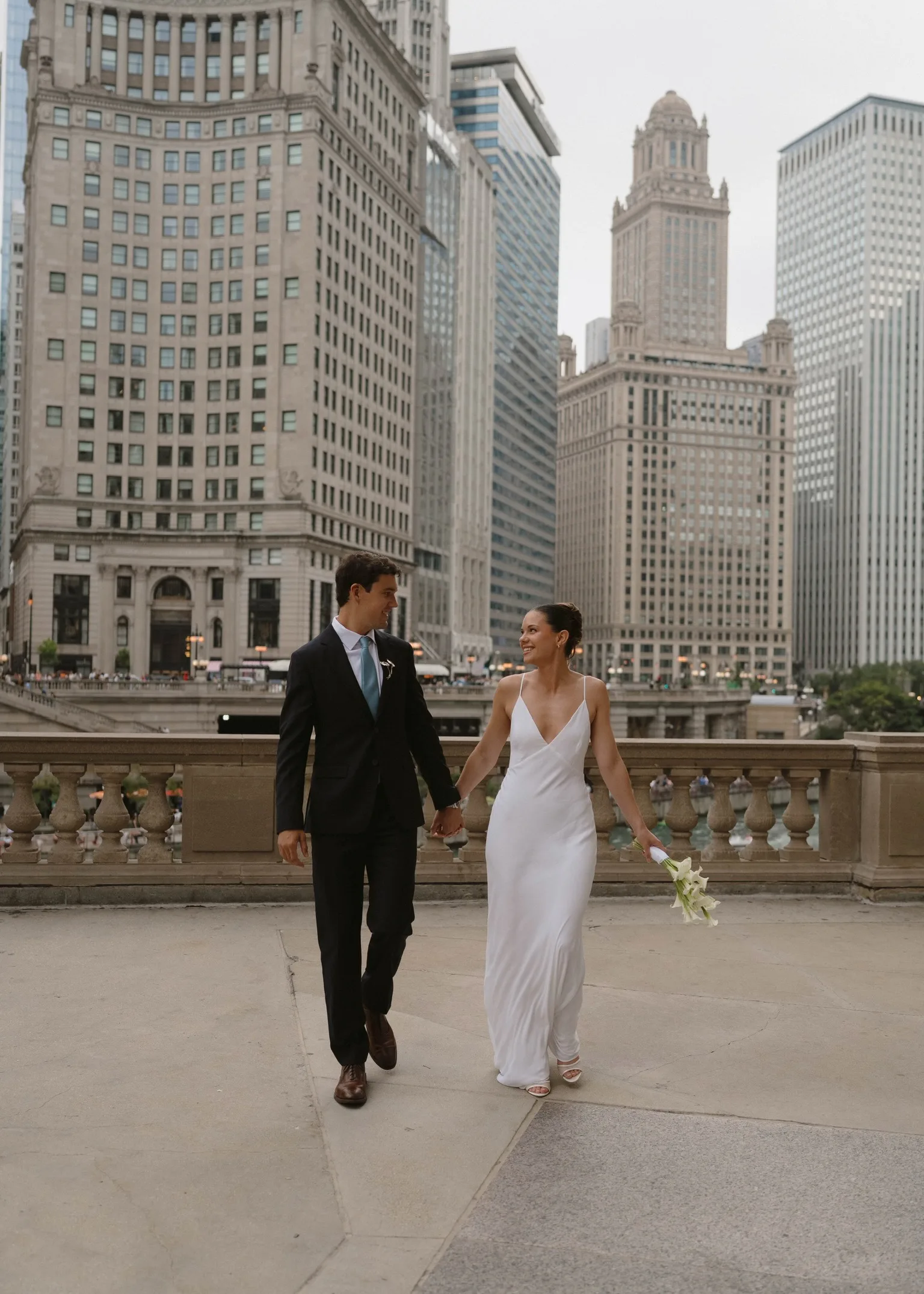
Chicago has everything a couple could want in a wedding destination: iconic architecture, incredible food, beautiful waterfront views, historic hotels and venues that range from elegant ballrooms to modern industrial spaces. It is a city filled with possibilities, but planning a Chicago wedding also requires a thoughtful approach to timing, transportation and, of course, the weather.
That combination is part of what makes Chicago weddings so special. No two celebrations need to look or feel the same. A wedding can be formal and timeless, intimate and personal, modern and energetic, or a combination of all three.
Whether you are planning a summer wedding overlooking the Chicago River or a candlelit celebration in February, the key is creating an experience that feels effortless for both you and your guests.
Chicago Weddings Are Becoming More Personal
One of the biggest wedding trends right now is a move away from celebrations that follow a standard formula. Couples are making more intentional choices about how they spend their time, where they gather and which traditions feel meaningful to them. Couples are increasingly prioritizing personalized celebrations and genuine connections over a cookie-cutter wedding experience. They want their wedding to feel like them, rather than a collection of trends they have seen online.
Chicago is the perfect setting for that kind of flexibility.
Emily and Reed’s July wedding weekend is a beautiful example. Instead of fitting everything into one traditional wedding day, their celebration unfolded over two days. They held an intimate backyard ceremony and dinner on Friday, followed by a reception at RPM Seafood on Saturday.
The format allowed them to experience two very different sides of their wedding. Friday felt intimate, personal and centered around the ceremony, while Saturday gave them the opportunity to celebrate with their guests in the heart of Chicago, overlooking the river. It also created more time for meaningful conversations and allowed the weekend to feel like a true celebration rather than one day moving quickly from one scheduled moment to the next.
That does not mean every couple needs to plan a two-day wedding. It does mean that you are allowed to reconsider the traditional timeline. You can host a private ceremony followed by a larger reception, begin the evening with cocktails before the ceremony, plan an intimate dinner and an energetic after-party, or create an entire weekend that introduces your guests to the city.
The best format is the one that reflects how you genuinely want to celebrate.
Guest Experience Is More Than Décor
Personalization and guest experience continue to shape wedding decisions, but creating an incredible experience does not always mean adding more décor or entertainment. Guests remember how a wedding felt. They notice whether transportation was easy, whether they knew where to go, whether dinner arrived on time and whether the evening flowed naturally.
A well-planned Chicago wedding begins before guests ever enter the ceremony.
Where will they stay? How will they get from the hotel to the venue? Are there multiple events in different areas of the city? Could traffic, road closures or another major Chicago event affect the schedule? If the ceremony & reception are in two different locations will guests have enough time to move between locations without feeling rushed?
These details are not especially glamorous, but they have a tremendous impact on the day.
Clear communication is also essential. Your wedding website should include hotel information, transportation details, dress-code guidance and realistic arrival instructions. If guests will be walking between locations, tell them. If transportation leaves at one specific time, make that very clear. If the ceremony or reception takes place outdoors, guests should know what to expect.
Thoughtful planning gives everyone permission to relax and enjoy the celebration.
Planning for Chicago Weather in Every Season
Chicago weather is unpredictable, and that is not limited to winter. Summer weddings can bring heat, humidity and thunderstorms. Spring can shift from sunshine to cold rain in a matter of hours. Fall is beautiful, but temperatures can drop quickly after sunset. Winter can bring snow, ice, wind and transportation delays.
For February specifically, Chicago’s climate includes average temperatures around 29 degrees and approximately 10.7 inches of snow during the month, according to the National Weather Service.
That does not mean couples should avoid a winter wedding. In fact, winter can be one of the most romantic times to celebrate in Chicago.
I am currently planning Alexandra and Michael’s February wedding, and the weather is part of our planning from the beginning. We are not trying to predict exactly what will happen months in advance. Instead, we are creating a plan that will work beautifully whether the day brings snow, clear skies or classic Chicago wind. That includes reviewing transportation routes, building appropriate time into the wedding-day schedule, considering where guests will wait before each event and making sure every outdoor photo location has an indoor alternative.
For any Chicago wedding, the backup plan should never feel like an afterthought. It should be a version of the day that you would still be happy to experience.
Winter Weddings Have Their Own Kind of Magic
While summer and fall dates remain popular, winter weddings offer design possibilities that feel especially appropriate in Chicago.
Warm candlelight, deeper colors, layered textures and dramatic indoor spaces can create an atmosphere that feels elegant rather than overly themed. Current winter wedding trends are leaning toward expressive color palettes, elevated food and beverage experiences, meaningful guest comforts and reception spaces filled with candlelight.
Couples can welcome guests with a signature cocktail or an elevated zero-proof option, use soft lighting to transform an indoor venue and incorporate a menu that feels warm and seasonal.
Guest comfort should remain part of the design. Coat-check capacity, transportation timing, protected venue entrances and the distance between the ceremony and reception all matter. Even small touches, such as having transportation waiting rather than arriving after guests have gathered outside, make a difference.
Winter may require additional planning, but it can also create a celebration that feels intimate, sophisticated and completely different from the traditional wedding season.
Chicago Wedding Venues Offer Something for Every Style
One of the reasons Chicago is such an incredible wedding city is the variety of venues available. Couples are not limited to one particular wedding style or experience.
For a celebration centered around exceptional food and views of the Chicago River, RPM Seafood offers a modern atmosphere, a memorable dining experience and a setting that feels unmistakably Chicago.
Artifact Events offers something completely different. Located in Ravenswood, the venue combines exposed brick, timber beams and industrial character with abundant natural light and a dramatic atrium. It is an elevated yet flexible setting that allows couples to create a celebration that feels personal to them.
For couples envisioning a classic luxury hotel wedding, The Peninsula Chicago offers elegant event spaces, five-star hospitality and accommodations in the heart of the city. Having the celebration and guest accommodations within the same property can also make the wedding weekend more convenient, especially for those traveling to Chicago.
The Chicago Cultural Center provides another type of grandeur. Its historic architecture, intricate mosaics and iconic stained-glass domes create a setting that could only exist in Chicago. It is ideal for couples who want their venue to become part of the overall design and experience of the wedding.
Each of these venues provides a very different backdrop. Before scheduling tours, couples should consider more than how a room looks in photographs. Guest count, catering, accessibility, transportation, nearby accommodations and what is included in the venue contract will all influence the final decision. The best Chicago wedding venue is not simply the most impressive one. It is the venue that supports your priorities, works with your budget and provides the right foundation for the celebration you want to create.
Creating a Chicago Wedding That Feels Effortless
Planning a Chicago wedding involves many moving pieces, especially when you are bringing together multiple venues, hotel accommodations, transportation and guests who may be unfamiliar with the city.
A wedding planner helps connect those pieces. My role is not only to help design a beautiful celebration, but also to anticipate what could affect the experience, guide decisions and make sure the wedding feels cohesive from the first guest arrival through the final song.
Chicago gives couples an incredible canvas. The architecture, neighborhoods, restaurants and changing seasons provide endless opportunities to create something memorable. The goal is not to plan a wedding that looks like every other Chicago wedding. It is to create a celebration that feels unmistakably yours and allows you to be fully present for it.


Questions About Planning a Chicago Wedding
What are some Chicago outdoor wedding venues with a view of the skyline?
Chicago has so many beautiful outdoor venues with skyline views, from downtown to the surrounding neighborhoods and for celebrations of every size. At the top of my list is Adler Planetarium, located at the tip of Museum Campus with Lake Michigan on one side and the full Chicago skyline on the other. It can host everything from an intimate seated dinner for 50 to a reception for 1,200 guests. Skydeck Chicago at Willis Tower offers a private 99th-floor space for up to 175 seated guests, while Hyde Park and Lincoln Park have beautiful lakefront options for both intimate weddings and larger celebrations.
How far in advance should we book our venue?
The venue is one of the first decisions you should make, especially if you're considering a Saturday during peak wedding season. Ideally, I recommend booking your venue at least 12 to 18 months in advance, followed by your photographer, florist, band or DJ about a year before the wedding. Seasonal lakefront venues are especially limited, so those dates can book quickly. Once your venue is secured, the other decisions become easier because you know the space, season and guest count you're planning for.
What are our options for a more intimate wedding?
Chicago offers so many wonderful options for a more intimate wedding. You can have a civil ceremony downtown, followed by dinner in one of the city's beautiful private dining rooms. RPM Seafood, for example, offers private spaces overlooking the river for groups starting at approximately 10 guests. One of my couples, Emily & Reed, chose an intimate backyard ceremony and dinner on Friday, followed by a larger reception at RPM Seafood on Saturday, allowing each part of the weekend to feel personal and intimate.
Are there any major Chicago events we should consider when choosing our wedding date?
The Chicago Marathon, Lollapalooza and the Chicago Air & Water Show are three major events to check before selecting your wedding weekend. The marathon takes place on the second Sunday of October (in 2027 it is October 10th), Lollapalooza is typically held in Grant Park in late July or early August, and the Air & Water Show takes over the lakefront in mid-August. All three can affect hotel rates and availability, traffic and photo locations throughout the city, not just near the events themselves. This doesn't necessarily mean you need to avoid those weekends, but you should understand how they may affect your guests before booking.
Do we need a permit for wedding or engagement photos in Chicago parks and other public areas?
Yes, the Chicago Park District requires a photography permit for wedding and engagement sessions in many of the city's parks. The current cost is a $35 application fee plus $45 per location, per hour for locations including Buckingham Fountain, the Lincoln Park Gardens, North Avenue Beach, Museum Campus and the Montrose Harbor skyline view. Millennium Park manages its permits separately, so it is important to check the requirements for each location in advance. Photos on public sidewalks and streets generally do not require a permit as long as you are not blocking pedestrian or vehicle traffic.